

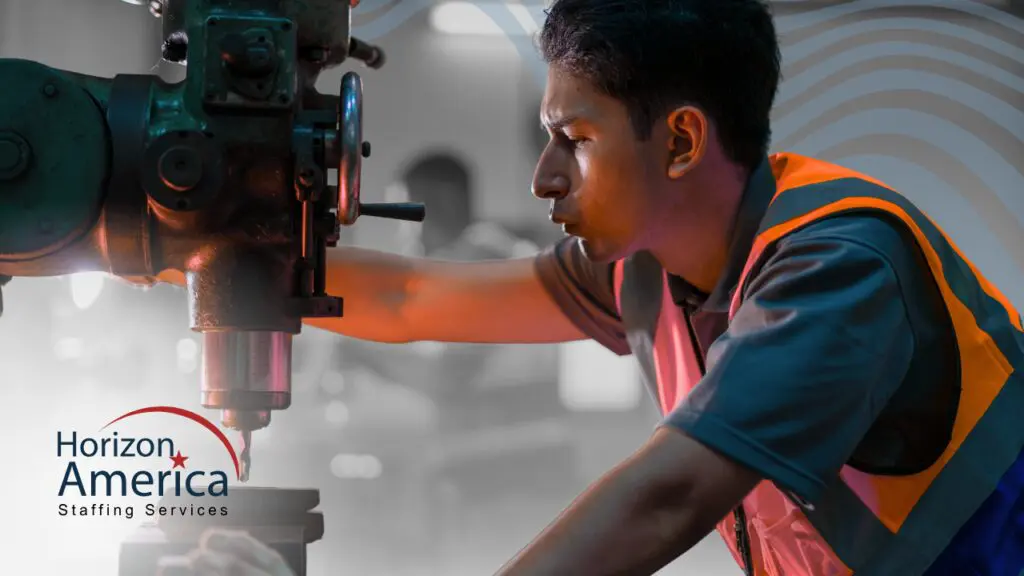
Starting a role in a warehouse or manufacturing environment means learning fast. Every shift introduces new processes, equipment, and expectations, and the difference between staying in the same role and moving forward usually comes down to how quickly those skills build over time.
That’s where skill development takes shape. It doesn’t always happen in a classroom or through formal training programs. In most light industrial roles, growth happens on the floor, through repetition, observation, and the willingness to take on more responsibility as opportunities come up.
There’s also a clear long-term impact to building skills early. Continuous skill development is one of the most important factors in staying employable, helping workers remain competitive as job requirements shift and new opportunities emerge.¹ The effort put into learning on the job builds your foundation for longer-term opportunity.
Why Skill Development Through Learning on the Job Matters for Long-Term Growth
In warehouse and manufacturing settings, performance is visible. Supervisors see who adapts quickly, who can handle multiple tasks, and who steps in when the pace increases. These are often the workers who get considered first when new opportunities open up.
There’s also a clear business case behind this. Research from Gallup shows that organizations can see an 18 percent increase in profit and a 14 percent increase in productivity when more employees feel they have opportunities to learn and grow.² That kind of investment shows up in how teams operate—workers become more consistent, more reliable, and more willing to take on additional responsibility. Those are the same qualities that lead to advancement on the floor.
On-the-job learning creates advantages that go beyond your current role:
- Stronger job security as skills become harder to replace
- More opportunities to move into higher-paying or specialized roles
- Greater flexibility to work across different tasks or departments
- Increased confidence when taking on new responsibilities
Read more: Reskill Industrial Workforce
Build Skills While You Work
Not every workplace offers formal training programs, but most provide opportunities to learn if you know where to look. The key is recognizing that warehouse training often happens through daily work.
Learning Through Repetition and Consistency
Repetition is one of the most effective ways to build skill in light industrial roles. The more consistently you perform a task, the more efficient and accurate you become.
This is where many workers see the biggest improvement early on. Tasks that initially take time start to feel routine, and that consistency becomes a foundation for learning more complex responsibilities.
Observing Experienced Workers
Some of the most valuable learning happens by watching how experienced team members handle their work. From how they organize tasks to how they manage time during high-volume periods, these small details often make the biggest difference.
Workers who pay attention to these patterns tend to pick up skills faster and avoid common mistakes that slow others down.
Taking on New Tasks When Available
Growth opportunities don’t always come with formal announcements. Sometimes they show up as small chances to help in another area, learn a new machine, or assist during a busy shift.
Taking these opportunities seriously is one of the most practical ways to grow while working. Over time, this builds a broader skill set that makes you more valuable across the operation.

Building Skills That Lead to Career Growth in Logistics
Not all skills carry the same weight. Some improve day-to-day performance, while others open the door to long-term advancement. Understanding the difference can help you focus your efforts more effectively.
Opportunities to grow are also closely tied to how employers invest in training. According to research cited by Harvard Business School Online, companies can see a 17 percent increase in productivity and a 21 percent increase in profitability when employees receive targeted training.³ For workers, that means being in the right environment can make a measurable difference in how quickly skills turn into advancement.
Cross-Training Across Roles
Learning multiple functions within a warehouse or facility makes you more adaptable. Workers who can move between tasks are often the ones who stay scheduled consistently, even when demand shifts.
Cross-training also positions you for roles that require oversight or coordination, where understanding multiple parts of the operation becomes essential.
Equipment and Technical Skills
In many facilities, learning how to operate equipment or handle more technical tasks can lead to higher-paying opportunities. These skills often require additional trust and responsibility, which is why they’re typically offered to workers who have shown consistency over time.
Reliability and Work Habits
Skill-building isn’t only technical. Showing up consistently, maintaining quality, and handling pressure during busy shifts all contribute to long-term growth.
In many cases, these habits are what separate workers who stay in the same role from those who move forward.
Choosing the Right Environment for Skill-Building
Not every workplace supports growth in the same way. Some roles are designed for short-term output, while others are structured to help workers develop over time.
If career growth in logistics is your goal, look for environments where:
- Training is part of daily operations
- Supervisors are open to teaching and cross-training
- Workers are given opportunities to take on new responsibilities
- Performance is recognized and leads to advancement
Turn daily work into long-term opportunity with Horizon.
Workers who treat daily tasks as opportunities to improve tend to build momentum over time.
At Horizon America, we work to connect candidates with employers where training is part of the culture and growth is a real possibility—not just a line in a job description.
If you’re looking for opportunities where you can learn on the job and build a stronger path forward, contact Horizon America to get started.
References
- Pologeorgis, Nicolas. “Enhancing Employability in Today’s Economy: Skills and Market Insights.” Investopedia, 5 Jan. 2026, https://www.investopedia.com/articles/economics/12/employability-labor-force-economy.asp
- Tatel, Corey and Mulherin, Megan. “Addressing the Barriers Blocking Employee Development.” Gallup, 22 Jul. 2025, https://www.gallup.com/workplace/692642/addressing-barriers-blocking-employee-development.aspx
- Heinrich, Ally. “5 Benefits of Corporate Employee Training & Development.” Harvard Business School, 22 May 2025, https://online.hbs.edu/blog/post/employee-training-development
