

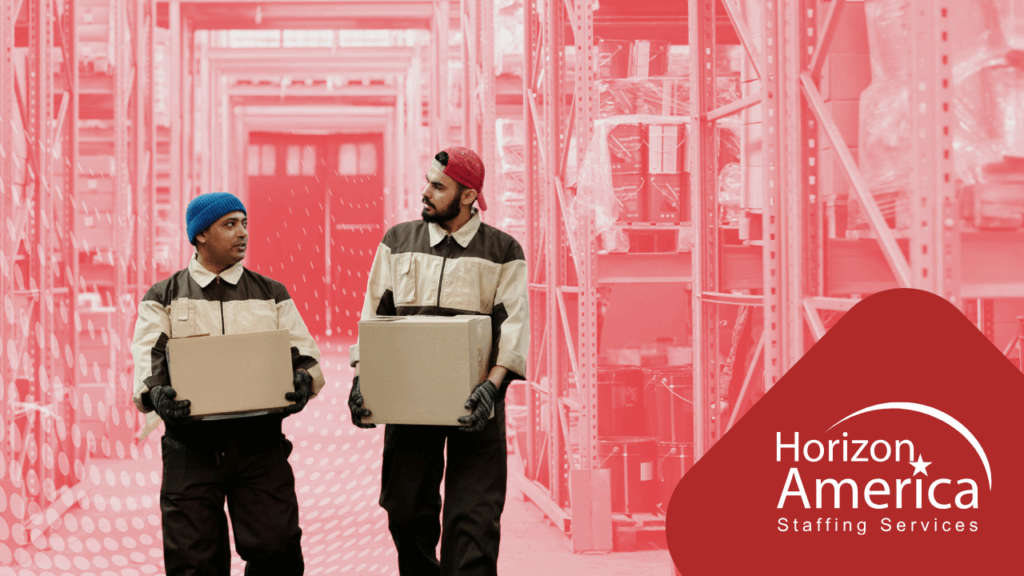
Your first warehouse shift starts soon. You’re excited about the job and maybe nervous about the work, but here’s what should be top of mind: staying safe. Warehouse injuries are common but not inevitable—they’re preventable when you know what to expect and how to protect yourself.
This warehouse safety checklist isn’t about scaring you. It’s about preparing you to walk through those doors ready for a successful, injury-free career. Apart from having exceptional skills in warehousing and light industrial roles, you also need to be safe—and that’s what we want for you, too.
Read more: The Night Shift Advantage: Why Overnight and Weekend Work Could Be Your Ticket to Higher Pay
Understanding Your Warehouse Environment
Before you can protect yourself, you need to understand the unique challenges of warehouse work. According to the BLS, warehouse companies see the highest injury rate of 4.3 percent—higher than the private industry average of 2.2 percent.¹ These aren’t just minor office hazards—they’re real physical risks that require constant awareness.
Common Workplace Hazards
Forklifts pose the biggest danger in most warehouses. These machines move fast with massive blind spots, so always assume operators can’t see you.² Beyond equipment, watch for these daily hazards:
- Wet floors from spills, cleaning, and weather
- Pallets, shrink wrap, and loose materials that can create trip hazards
- Overhead storage that could shift or fall
- Dock doors and trailer gaps
- Conveyor belts and moving machinery
Environmental Factors
Your body faces challenges beyond just the work itself. Temperature extremes are common—freezers require proper layering while hot warehouses demand constant hydration. Give yourself time to adjust rather than pushing too hard initially.
Noise levels often exceed safe limits in warehouse environments. If you must shout to be heard three feet away, you need hearing protection.³ Meanwhile, repetitive motions from lifting, bending, and twisting add up over time. Proper technique matters from your very first lift.⁴
Your Essential PPE and Safety Gear
Personal Protective Equipment (PPE) isn’t optional—it’s your first defense. Understanding what you need ensures new-hire readiness.
Required PPE for Most Positions:
- Steel-toed boots: Protect against dropped items and equipment (break them in before your first shift)
- High-visibility vest or shirt: Ensures equipment operators see you with reflective strips
- Safety glasses: Guards against dust, debris, and unexpected projectiles
Additional Protection Based on Your Role:
- Cut-resistant gloves: Essential for handling boxes and materials with sharp edges
- Back support belt: Provides stability and reminds you to lift properly
- Hearing protection: Use properly rated earplugs in loud environments
- Hard hat: Required in areas with overhead work or low clearances
Critical Safety Rules for Day One
Here’s a safety checklist first-time warehouse workers need on day one—and these are non-negotiable rules.
Communication Basics
Clear communication prevents accidents. Always make eye contact with equipment operators before approaching their area—a simple wave ensures they’ve seen you. Learn the standard hand signals used in your facility, as these work even in noisy environments. If your trainer doesn’t cover them, ask.
Most importantly, report every hazard you see, no matter how minor it seems. That wet spot, loose board, or damaged rack could cause serious injuries.
Movement and Positioning Rules
- Stay in designated walkways (painted lines mark safe zones)
- Never take shortcuts through equipment areas
- Position yourself where you can see and be seen
- Avoid blind corners and stay clear of dock doors
- Never stand behind reversing vehicles
- Keep clear of suspended loads
Temp Worker Safety Considerations
As a temporary or new worker, you face additional challenges that permanent employees may forget to mention.
Nobody expects you to know everything on day one. Asking questions shows wisdom, not weakness. If equipment seems broken or unsafe, speak up immediately—let supervisors determine what’s normal wear versus dangerous damage.
Know Your Rights
- You can refuse unsafe work without retaliation
- You deserve the same safety training as permanent staff
- You should receive all required PPE at no cost
- You must report injuries immediately, no matter how minor
Remember, you’re responsible for following all safety rules, even if you see experienced workers taking shortcuts. Those workers have developed judgment you haven’t earned yet.
Building Safe Habits from the Start
Safety isn’t just rules—it’s developing protective instincts that keep you safe automatically.
Start Every Shift Right
- Arrive rested (fatigue causes accidents)
- Do a mental check: Are you focused? Any medications affecting alertness?
- Stretch before starting work
- Inspect your PPE for damage
- Review the day’s specific hazards with your team
End Every Shift Safely
- Clean up your work area (your mess could injure others)
- Report any close calls or near-misses
- Secure any equipment you used
- Reflect on the safety challenges faced
Prepare for success with Horizon America.
At Horizon America, we believe every worker deserves to go home safely. That’s why we provide comprehensive safety preparation before your first shift, not just basic orientation.
We ensure every placement understands workplace hazards, has access to required PPE, and knows their safety rights. Our team stays connected through your first days, ready to address any concerns that arise.
Want to understand how safety and operational efficiency work together? Check out our white paper: Entering Peak Season: Combining Operational Agility and Risk & Safety for Light Industrial Companies.
Starting a warehouse job soon? Partner with Horizon America for placements that prioritize your safety and well-being.
References
- “Incidence rate and number (thousands) of nonfatal occupational injuries” US Bureau of Labor Statistics, 8 Nov. 2024, https://www.bls.gov/news.release/osh.t04.htm
- “Hazards and Solutions.” Occupational Safety and Health Administration, https://www.osha.gov/warehousing/hazards-solutions. 12 Sep. 2025.
- “Occupational Noise Exposure.” Occupational Safety and Health Administration, https://www.osha.gov/noise. 12 Sep. 2025.
- “Materials Handling and Storage.” Occupational Safety and Health Administration, https://www.osha.gov/sites/default/files/publications/osha2236.pdf. 12 Sep. 2025.
