

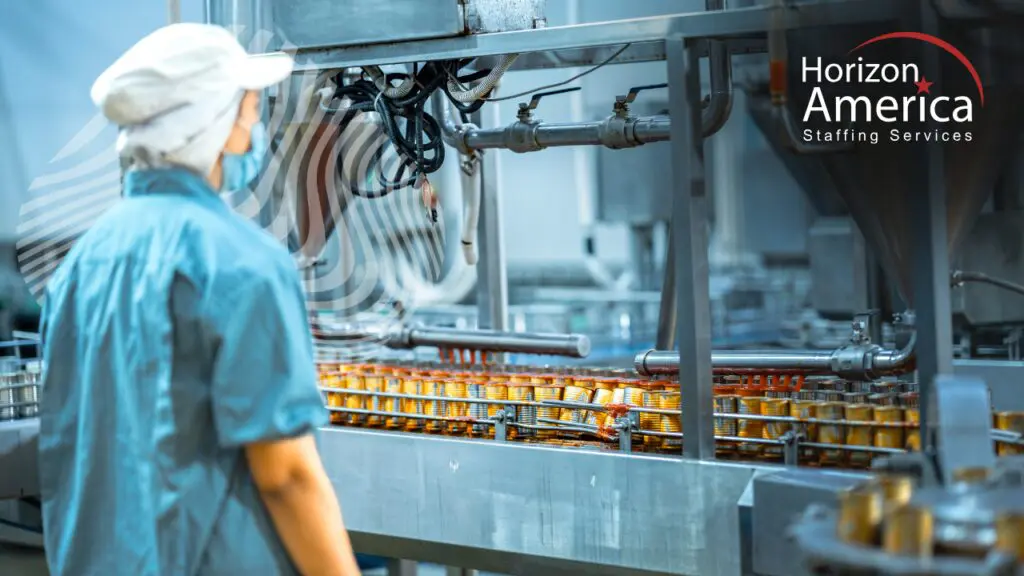
If you’ve worked in food manufacturing, you may assume your experience only applies to processing facilities. Likewise, if you’ve spent your career in warehouse or distribution operations, you might not consider opportunities in food production. In reality, these two industries share many of the same expectations for employees, and the skills you have today may already qualify you for roles across both environments.
That doesn’t mean every position is interchangeable. Food manufacturing and distribution each have unique equipment, workflows, and technical requirements. However, employers in both industries consistently look for workers who can follow procedures, work safely, stay productive, and contribute to reliable operations. Understanding which skills transfer and how to present them during your job search can open the door to more opportunities than you may realize.
The Skills That Transfer Between Food Manufacturing and Distribution
Many employers hiring for food manufacturing warehouse jobs value the same workplace habits, regardless of whether products are being made, packed, stored, or shipped. If you’ve built the following habits in one environment, you already have experience that can translate well into the other.
1. Reliability and Attendance
Production schedules and delivery commitments depend on employees showing up consistently and being ready to work.
Whether you’re operating on a food production line or helping fulfill customer orders in a distribution center, dependable attendance helps keep operations running on time. Employers often see a strong attendance record as an indicator that a worker can be trusted with greater responsibilities over time.
2. Safety Awareness
Both industries place a strong emphasis on workplace safety. Food manufacturing workers are accustomed to following sanitation procedures, wearing personal protective equipment, and maintaining clean work areas. Distribution facilities similarly rely on employees to follow safety guidelines around material handling, equipment operation, and warehouse traffic.
The emphasis on safety reflects real conditions across both industries. According to the US Bureau of Labor Statistics, private industry employers reported 2.5 million nonfatal workplace injuries and illnesses in 2024.¹ Within that picture, food manufacturing recorded 3.3 recordable injury and illness cases per 100 full-time workers.² On the other hand, general warehousing and storage recorded 4.9 cases per 100 workers during the same period.³ Although the specific safety procedures may differ, employers in both industries value candidates who understand the importance of following protocols, maintaining awareness, and working consistently to reduce risk.
3. Physical Stamina and Consistent Performance
Industrial work often involves standing for long periods, lifting materials, and working at a steady pace throughout an entire shift.
Workers who have successfully handled these physical and repetitive demands in food processing are typically prepared for many warehouse responsibilities, while experienced warehouse associates often adapt well to production environments that require consistency and endurance.
4. Following Standardized Processes
Manufacturing and distribution both rely on repeatable processes to maintain quality and efficiency.
Whether you’re following production specifications, packaging requirements, inventory procedures, or shipping instructions, employers value workers who can learn established processes and perform them accurately day after day.
This ability often makes the transition between food processing to distribution jobs much smoother than many candidates expect.

How to Position Your Experience for More Opportunities
Having transferable industrial skills is only part of the equation. Knowing how to explain those skills can help employers and recruiters recognize where you’ll be successful.
1. Highlight the Work Habits Behind Your Experience
Instead of only listing previous job titles, describe the responsibilities that demonstrate your strengths.
For example, mention experience meeting production quotas, following food safety procedures, maintaining attendance, operating in fast-paced environments, or working rotating shifts. These accomplishments tell employers more about how you work than your job title alone.
2. Be Honest About What You’re Still Learning
Not every skill transfers directly. A distribution role may require different warehouse management systems or powered industrial equipment, while a food manufacturing position may involve specialized food safety practices or production machinery.
Being upfront about what you already know and what you’re willing to learn shows confidence and professionalism. Many employers are prepared to provide job-specific training for motivated candidates with strong foundational skills.
3. Work with Recruiters Who Understand Both Industries
One advantage of partnering with a staffing agency that serves both food manufacturing and distribution is that recruiters can recognize opportunities you might overlook on your own.
Rather than viewing your move as a complete career change, they can identify positions where your existing warehouse worker skills and production experience already align with what employers need. That often leads to better job matches and a smoother transition into a new role.
Build on the experience you already have.
Moving between food manufacturing and distribution doesn’t mean starting your career over. Many of the qualities employers value most are developed in both environments. Understanding how these strengths apply across industries can expand your options and help you approach new opportunities with greater confidence.
If you’re ready to explore your next opportunity, talk to a Horizon America recruiter about how your food manufacturing or distribution experience opens doors in both verticals.
References
- “2.5 million workplace injuries and illnesses in private industry in 2024, down 3.1 percent from 2023.” Bureau of Labor Statistics, 23 Mar, 2026, https://www.bls.gov/opub/ted/2026/2-5-million-workplace-injuries-and-illnesses-in-private-industry-in-2024-down-3-1-percent-from-2023.htm
- “Industries at a Glance Food Manufacturing: NAICS 311.” Bureau of Labor Statistics, 24 Jun. 2026 https://www.bls.gov/iag/tgs/iag311.htm
- “TABLE 1. Incidence rates of nonfatal occupational injuries and illnesses by industry and case types, 2024.” Bureau of Labor Statistics, 22 Jan. 2026, https://www.bls.gov/web/osh/table-1-industry-rates-national.html
