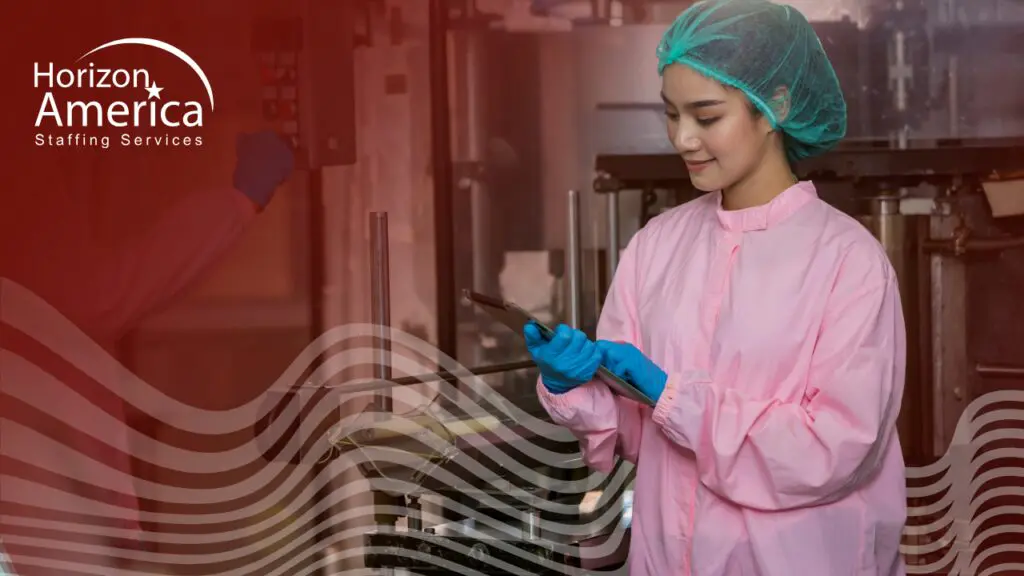
Your food processing placement strategy rarely struggles with having too few hires. More often, the difficulty comes because the same positions keep reopening.
The hiring process starts over, supervisors spend more time training replacements, and HR is left managing another backfill request. After several rounds, it can feel like the labor market is simply too difficult.
Demand isn’t slowing, either. According to the US Bureau of Labor Statistics, food and beverage manufacturing employed approximately 2.1 million workers in 2024 and is projected to add 130,000 jobs by 2034, making it one of the largest and fastest-growing manufacturing sectors.¹ As hiring demand continues, filling roles quickly becomes less valuable than filling them well.
An effective food processing placement strategy looks beyond job titles and shift schedules. It identifies the conditions employees will face every day, so candidates are matched to the realities of the work.
Why Your Food Processing Placement Strategy Needs a Different Approach
Production environments in food processing have demands that don’t always exist in other manufacturing settings. Cold temperatures, strict sanitation protocols, repetitive tasks, attendance expectations, food safety standards, and production speed all shape whether someone is likely to succeed in the role.
These aren’t details to explain after a candidate accepts an offer. They’re factors that should guide the placement process from the beginning.
1. Understand the Work Environment Before Recruiting
A job description may list responsibilities, but it rarely captures the full experience of working on a production line.
Before recruiting begins, staffing teams should understand questions such as:
- How cold is the work area?
- How fast does the production line move?
- How frequently do sanitation procedures interrupt production?
- What physical demands are expected throughout the shift?
- How much interaction will supervisors have with new employees?
These conditions influence who will perform well and who may struggle during the first few weeks. When candidates understand the realities of the production environment before accepting a position, employers can set clearer expectations and improve placement quality.
2. Define the Reliability Profile
Many high-turnover food processing roles don’t fail because workers lack technical ability. They fail because the role demands a level of consistency that wasn’t evaluated during hiring.
Reliability includes more than showing up on time. It also involves adapting to repetitive work, maintaining quality standards throughout long shifts, following food safety procedures, and working consistently under production targets.
Research supports the importance of matching workers to these demands. A recent working paper found that higher labor intensity was associated with a greater injury burden.² That reinforces the importance of evaluating workload expectations, work pace, and physical conditions before placement rather than discovering potential mismatches after employees have already started.
3. Include Supervisors in the Placement Process
Supervisors often know which employees succeed and which leave quickly, but that knowledge doesn’t always make it into recruiting conversations.
Patterns such as frequent call-offs, difficulty keeping pace on certain production lines, or challenges during overnight shifts provide valuable insight into what the role actually requires.
Building those observations into a food manufacturing staffing strategy creates stronger matches than relying solely on job descriptions.

Practical Ways to Reduce Backfill Cycles
Breaking recurring backfill cycles requires improving placement quality rather than simply increasing recruiting activity.
Manufacturers are increasingly recognizing this challenge. According to a survey cited in Deloitte’s 2024 manufacturing talent study, more than 65 percent of manufacturing executives identified attracting and retaining talent as one of their top business challenges.3
1. Review Why Previous Placements Didn’t Stay
Instead of focusing only on time-to-fill, examine why employees leave.
Look for recurring themes such as scheduling expectations, environmental conditions, supervisor communication, transportation challenges, or production pace. If the same reasons appear repeatedly, the issue may be the role definition rather than candidate availability.
2. Match Candidates to Production Conditions
Effective production-line staffing means evaluating whether candidates are comfortable with the specific environment they’ll enter.
Someone who performs well in one manufacturing facility may struggle in another if temperature, sanitation requirements, physical demands, or scheduling expectations are significantly different.
Matching people to those conditions is what separates a placement that holds from one that reopens in three weeks.
3. Treat Every Placement as a Continuous Improvement Opportunity
Every successful or unsuccessful placement provides information about the role itself.
Tracking retention patterns, onboarding feedback, supervisor observations, and turnover trends helps refine future hiring decisions. Over time, this creates a more accurate reliability profile that supports stronger placement outcomes.
Rather than repeating the same recruiting process after every vacancy, employers can build a system that becomes more effective with each hire.
Read more: Stop Scrambling: Build Your Flexible Workforce Now
Find out what’s driving turnover in your food processing operation.
When production roles continue reopening, the better approach is understanding the job before searching for candidates. Environmental conditions, attendance expectations, production pace, safety requirements, and supervisor support all influence whether a placement succeeds beyond the first few weeks.
A staffing partner that diagnoses these conditions before recruiting delivers a fundamentally different level of service. Instead of simply filling openings, they help build a placement strategy designed around long-term reliability.
If recurring vacancies are affecting your food processing operation, talk to a Horizon America recruiter about diagnosing placement conditions before the next hire.
References
- “Feeding the economy: employment growth in food and beverage manufacturing expected to continue through the 2024–34 decade.” Bureau of Labor Statistics, Jun. 2026, https://www.bls.gov/opub/mlr/2026/article/feeding-the-economy-employment-growth-in-food-and-beverage-manufacturing-expected-to-continue-through-the-2024-34-decade.htm
- Colazo, Jorge. “Labor Intensity, Workload Pressure, and Injury Burden in Food Manufacturing: Evidence from OSHA Establishment Records.” SSRN eLibrary, 25 May 2026, https://papers.ssrn.com/sol3/papers.cfm?abstract_id=6826896
- Coykendall, John et al. “Taking charge: Manufacturers support growth with active workforce strategies.” Deloitte, 3 Apr. 2024, https://www.deloitte.com/us/en/insights/industry/manufacturing-industrial-products/supporting-us-manufacturing-growth-amid-workforce-challenges.html